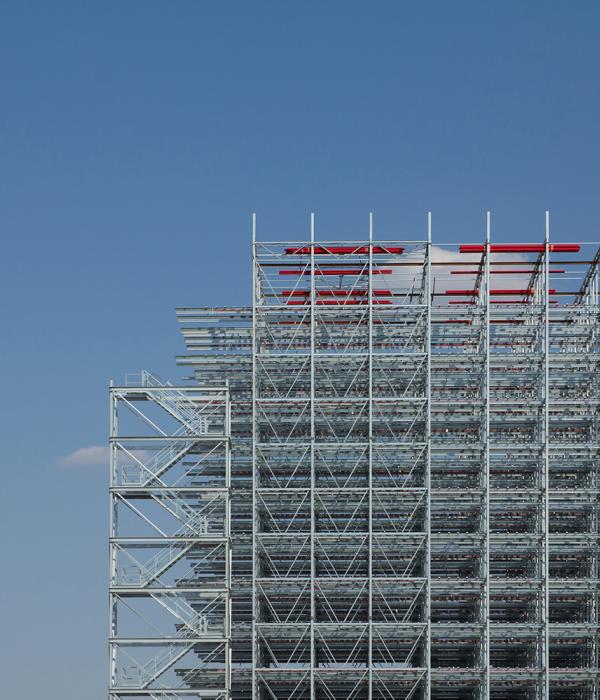
Foam systems
Protect the hazard. Contain the fire.
Altenova designs and delivers foam fire suppression systems for facilities where flammable liquids, plastics and other specific fire hazards require specialised protection. By combining water, foam concentrate and air, these systems generate a foam blanket that covers the burning surface, helping to suppress the fire, limit the release of flammable vapours and reduce the risk of re-ignition.
Foam suppression is particularly suitable for industrial and storage environments where conventional water-based firefighting methods may be insufficient or unsuitable for the specific fire hazard.
How do foam fire suppression systems work?
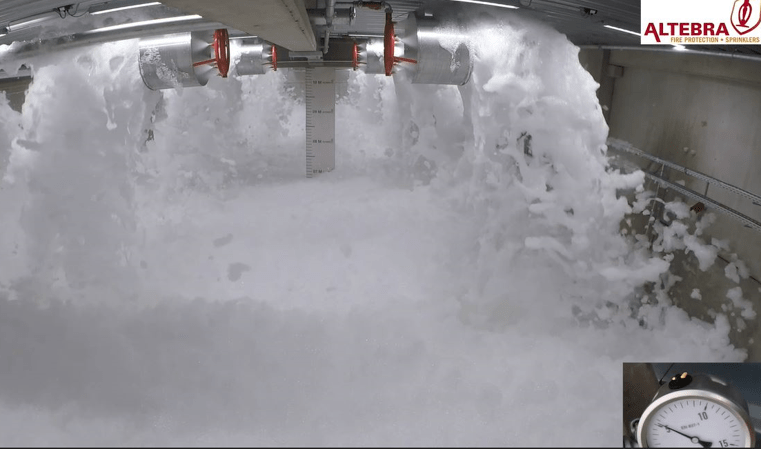
Foam fire suppression systems combine foam concentrate with water at a controlled proportion. The resulting solution is transported through a network of pipes to dedicated discharge devices, such as foam generators, foam pourers, spray heads or foam monitors, where air is incorporated to produce foam.
The foam spreads over the burning surface, forming a blanket that separates the fuel from the surrounding air and helps suppress flammable vapours. Its cooling effect can further support fire suppression, depending on the foam type and application. By covering the fuel surface, the foam also helps prevent re-ignition.
These systems are designed to address specific fire risks, particularly those involving flammable liquids, where effective surface coverage is essential.
Types of foam fire suppression systems
The appropriate foam system depends on the fire hazard, the characteristics of the protected area and the required foam expansion ratio. Altenova provides low-, medium- and high-expansion foam solutions tailored to the specific application.
Low-expansion foam systems
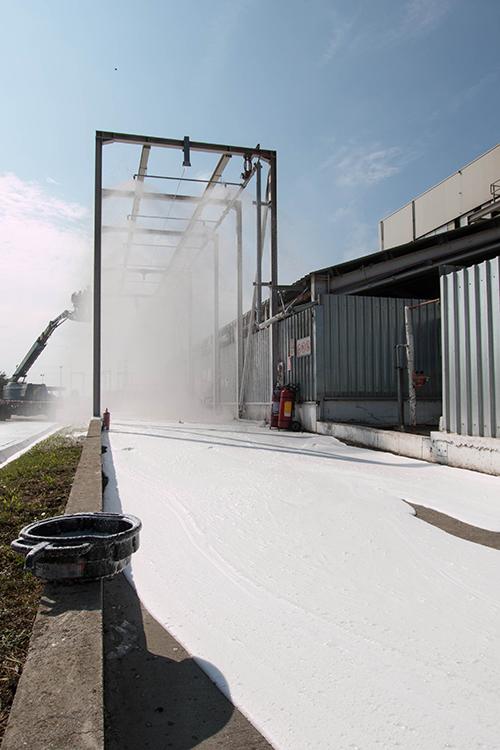
Low-expansion foam produces a relatively dense foam blanket that is well suited to protecting flammable-liquid hazards. Typical applications include chemical and petrochemical facilities, fuel storage areas and industrial processes involving combustible liquids.
Medium-expansion foam systems
Medium-expansion foam provides greater expansion than low-expansion foam, enabling rapid coverage of spill areas, bunds and other designated hazard zones. It can be suitable for applications where effective surface coverage and vapour suppression are key requirements.
High-expansion foam systems
High-expansion foam generates a large volume of lightweight foam that can fill enclosed or large-volume spaces. Depending on the system design and fire hazard, applications may include certain chemical storage areas, industrial facilities and aircraft hangars.
The selection of the appropriate foam type and system configuration is based on the specific fire scenario and applicable design requirements.
Transitioning to fluorine-free foam
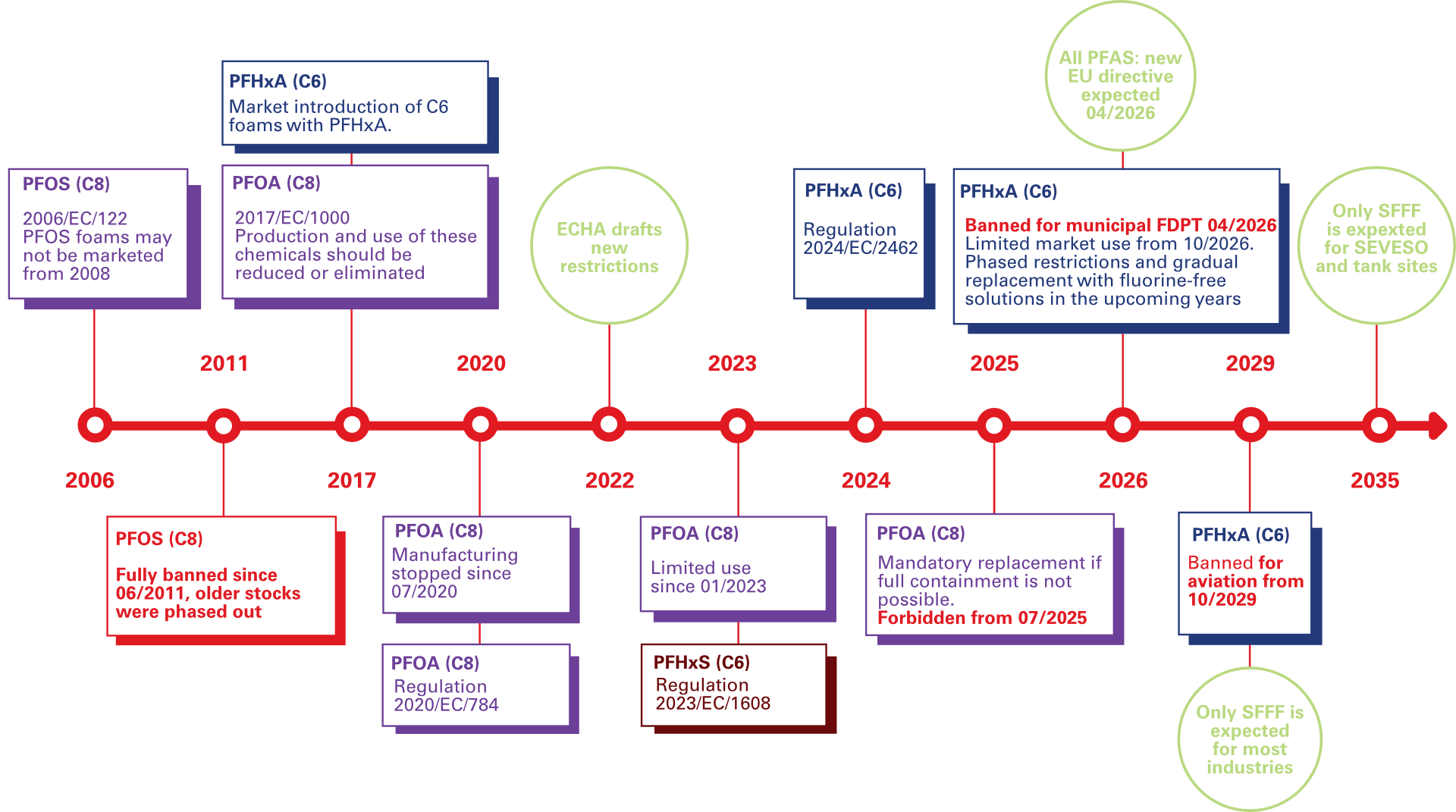
Environmental regulations and the evolving requirements governing per- and polyfluoroalkyl substances (PFAS) are driving changes in the use of certain firefighting foams. Depending on the foam formulation and applicable regulatory requirements, existing installations may need to be assessed and adapted to support a transition to fluorine-free alternatives.
Altenova supports customers throughout this process, providing technical advice and tailored proposals for foam replacement, system compatibility assessments, and the necessary cleaning and disposal procedures. This helps facilities plan their transition while maintaining the required level of fire protection and operational readiness.