Gaseous fire suppression systems
No water. No residue. No compromise.
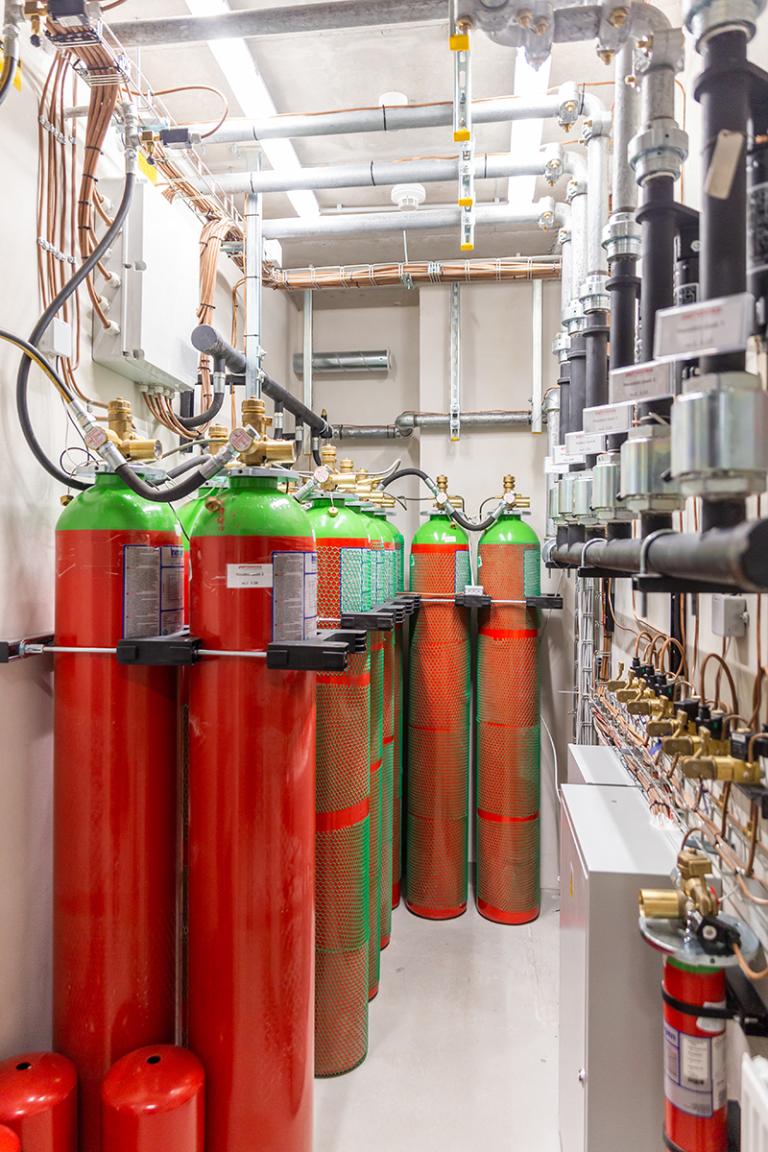
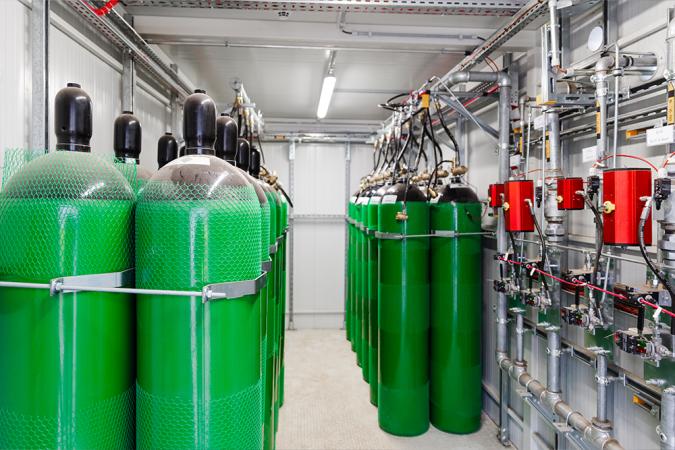
Altenova designs and delivers gaseous fire suppression systems for environments where protecting sensitive equipment, valuable assets and critical operations is essential. These systems provide effective fire suppression without the water damage or extinguishing-agent residue associated with conventional water-based systems, making them particularly suitable for data centres, server rooms, electrical and control rooms, telecommunications facilities, archives, museums, critical infrastructure and specialised industrial environments.
How do gaseous fire suppression systems work?
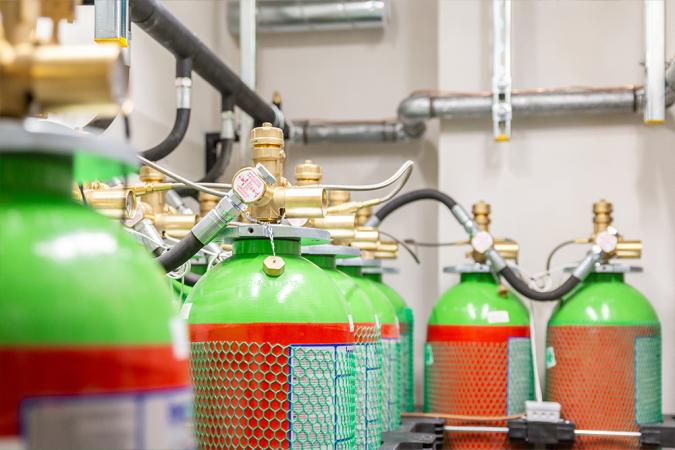
Gaseous fire suppression systems use specialised extinguishing agents to suppress fires by interrupting the combustion process. Depending on the extinguishing agent, fire suppression is achieved primarily by reducing the oxygen concentration or absorbing heat within the protected enclosure.
When a fire is detected, the system releases the extinguishing agent into the protected area, rapidly establishing the conditions required for fire suppression. As the agent leaves no solid or liquid extinguishing residue, sensitive equipment can be protected without the cleanup typically associated with water-based firefighting methods.
Designed around your environment
Every gaseous fire suppression system must be tailored to the characteristics of the protected space, the fire hazard, the selected extinguishing agent and the applicable safety requirements. System design also considers personnel safety, including evacuation provisions where necessary.
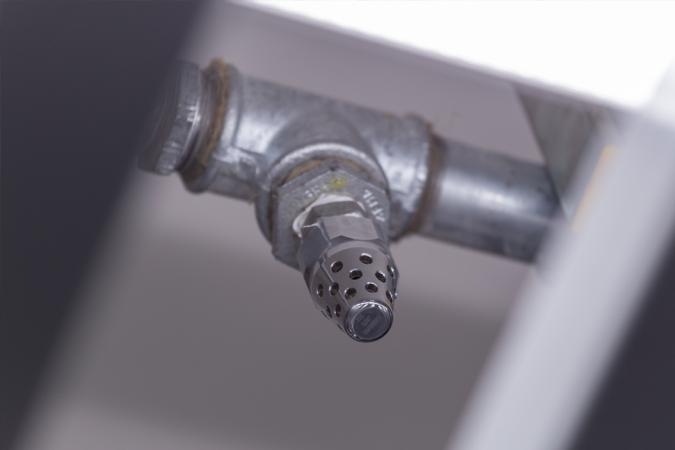
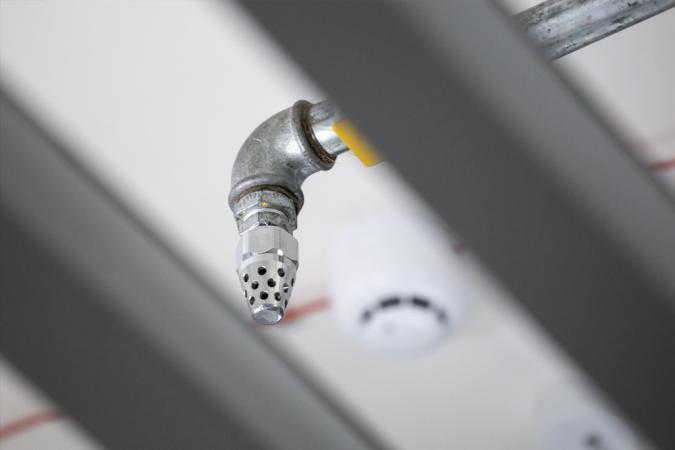
In environments sensitive to acoustic vibrations, such as data centres and server rooms, specially designed acoustic nozzles can be incorporated to reduce noise levels during agent discharge and help protect sensitive equipment.
Types of gaseous fire suppression systems
The selection of the appropriate extinguishing agent depends on the application, the fire risks, environmental considerations and the specific requirements of the protected facility.
Clean agent systems
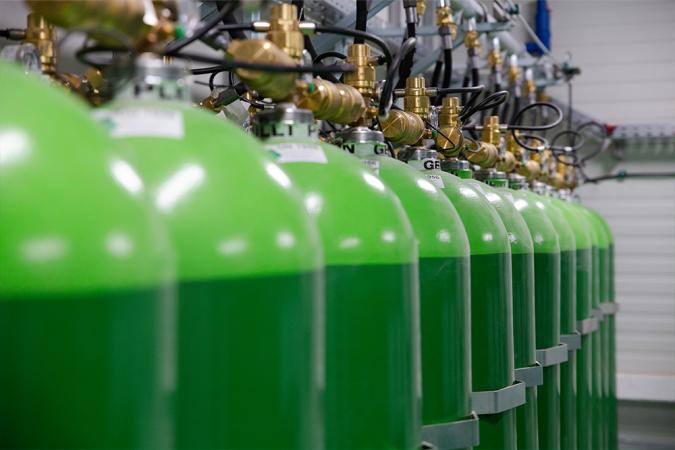
Clean agent systems use gaseous extinguishing agents that suppress fire primarily by absorbing heat and interrupting the combustion process. They are particularly suitable for protecting sensitive electronic equipment and other assets that could be damaged by water or extinguishing-agent residue.
These systems are commonly used in data centres, server rooms, telecommunications facilities, control rooms and other environments where maintaining equipment integrity and minimising operational downtime are key priorities.
Inert gas systems
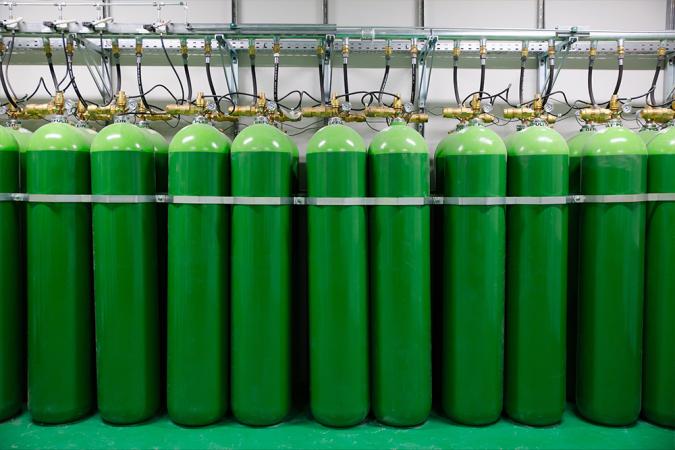
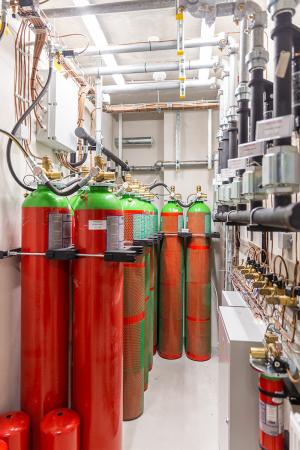
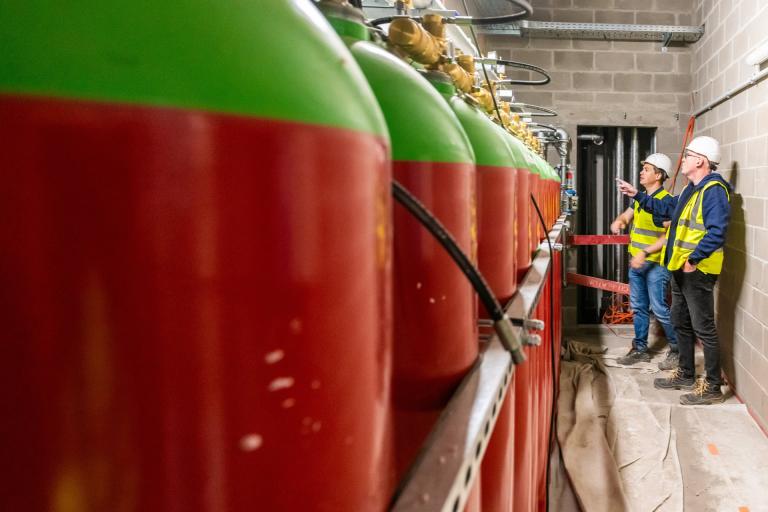
Inert gas systems use agents such as nitrogen, argon or mixtures of these gases to reduce the oxygen concentration within the protected enclosure to a level at which combustion can no longer be sustained. Designed for applications where residue-free fire suppression is required, they can provide effective protection for sensitive equipment and critical infrastructure.
Inert gases occur naturally in the atmosphere and may offer advantages in terms of environmental impact and agent replenishment, depending on the specific system and application. As with all gaseous suppression systems, the design must ensure that the required extinguishing concentration can be achieved while addressing the safety of occupants.