Sprinkler systems
Ready when heat rises. Reliable when it matters.
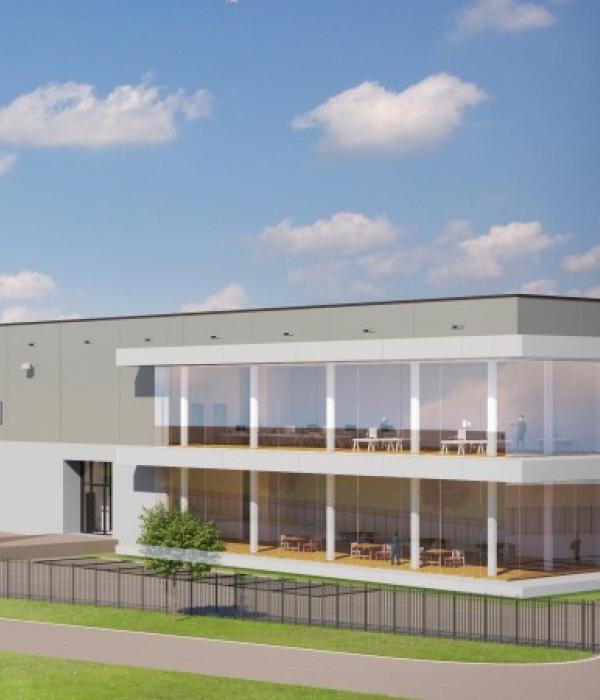
Altenova designs and delivers sprinkler systems tailored to the specific fire risks, building characteristics and operational requirements of each facility. From offices and commercial buildings to industrial production halls, warehouses and car parks, our solutions provide reliable fire protection by automatically controlling or suppressing fires and helping to minimise damage.
How do sprinkler systems work?
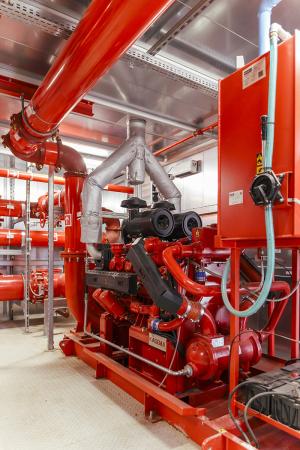
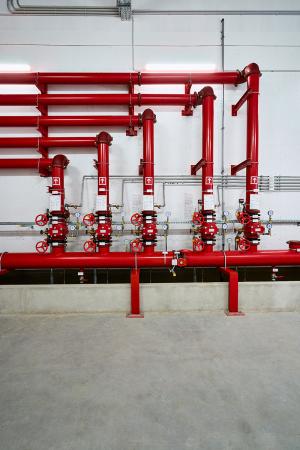
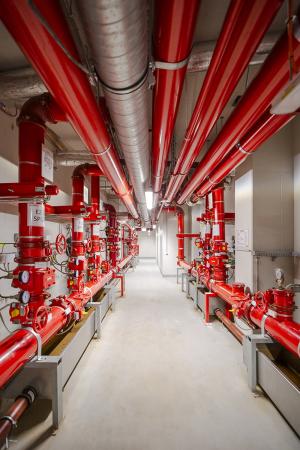
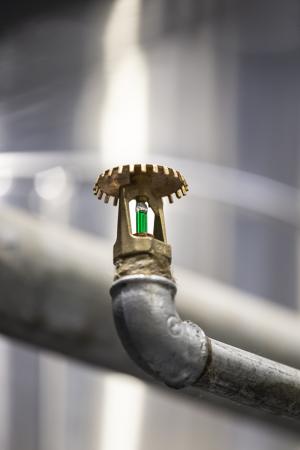
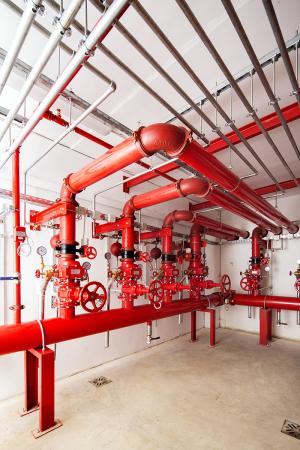
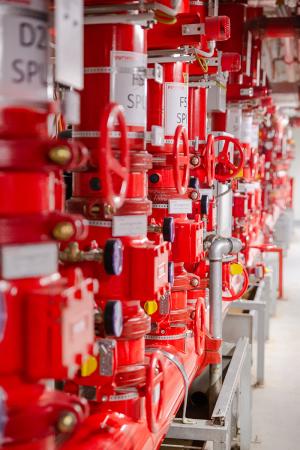
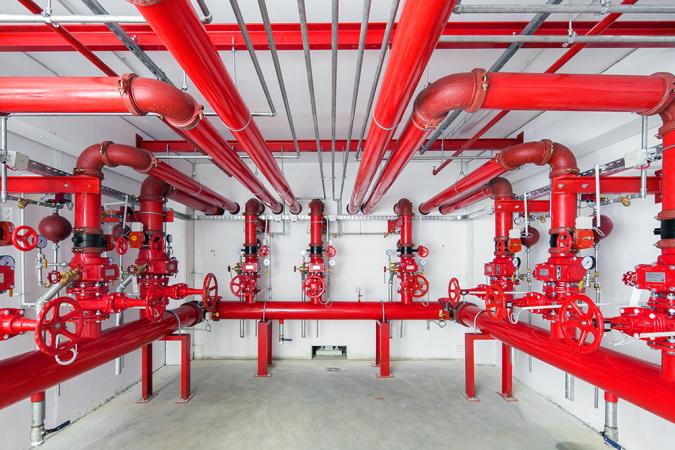
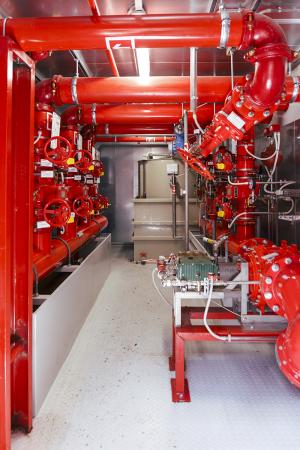
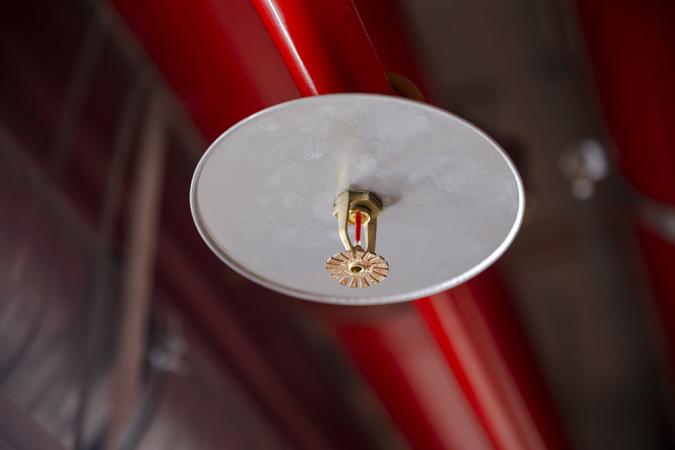
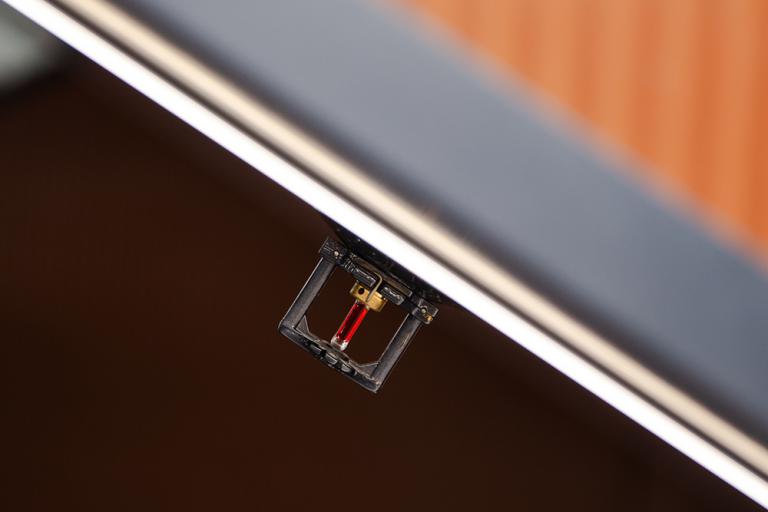
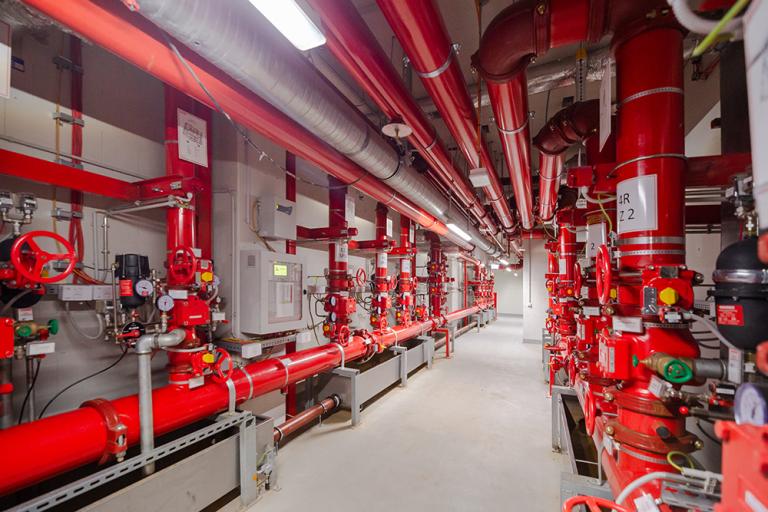
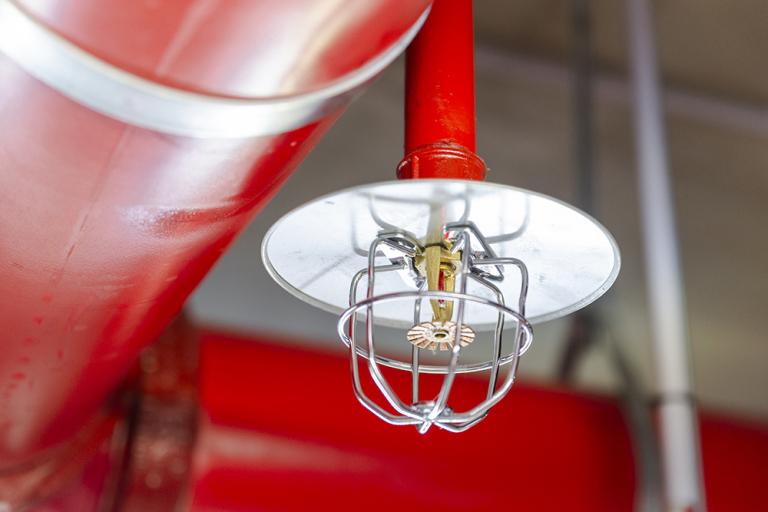
A sprinkler system consists of a water supply, pumps where required, alarm valve stations, a network of interconnected pipes and strategically positioned sprinkler heads. Each sprinkler head is designed to activate individually when the surrounding temperature reaches a predetermined level, typically causing a glass bulb to break or a fusible element to release. Water is then discharged directly onto the fire-affected area.
Only sprinkler heads exposed to sufficient heat are activated, helping to contain the fire while limiting unnecessary water discharge in unaffected areas. Depending on the fire's development and the system design, one or more sprinkler heads may operate to control or extinguish the fire.
Types of sprinkler systems
The appropriate sprinkler system depends on factors such as ambient temperature, the characteristics of the protected area, the fire hazard and the potential consequences of accidental water discharge.
Wet pipe systems
Wet pipe systems have pipework permanently filled with pressurised water, allowing water to be discharged immediately when a sprinkler head activates. Due to their straightforward operation and rapid response, they are widely used in buildings where freezing temperatures are not a concern.
Dry pipe systems
Dry pipe systems use pressurised air or nitrogen in the pipework upstream of the dry pipe valve. When a sprinkler head activates, the pressure drops, allowing the valve to open and water to enter the pipe network before being discharged through the activated heads. These systems are suitable for areas exposed to freezing temperatures, as well as certain high-temperature environments where conventional wet pipe systems are unsuitable.
Pre-action systems
Pre-action sprinkler systems are designed for areas where accidental water discharge could cause significant damage, such as data centres, museums, libraries and other facilities containing sensitive equipment or valuable assets. They combine dry pipe arrangements with an automatic fire detection system, providing additional safeguards against unintended water discharge.
Depending on the design and applicable requirements, Type A and Type B pre-action systems use different activation principles. Type A systems require a signal from the automatic fire detection system to open the valve, while Type B systems can also operate following sprinkler activation and a subsequent pressure drop in the pipework.
Foam-enhanced sprinkler systems
Foam-enhanced sprinkler systems combine water with a foam concentrate to improve fire suppression performance in applications involving flammable liquids and other specific fire hazards. The foam solution helps control the fire by covering the fuel surface and limiting the release of flammable vapours, depending on the foam type and application.
Control mode and suppression mode sprinklers
Sprinkler systems can also be classified according to their intended fire-control performance.
Control mode sprinklers are designed to control a fire by cooling the fire and surrounding materials, limiting fire growth and preventing further spread until additional firefighting measures can be implemented.
Suppression mode sprinklers are designed to deliver a higher-intensity water discharge to rapidly reduce the heat release rate of a fire and, where the conditions and system design allow, extinguish it.
The appropriate sprinkler type depends on the fire hazard, the characteristics of the protected materials and the applicable design requirements.
Water discharge capacity
The water discharge capacity is selected according to the specific application, fire hazard and sprinkler design. A single sprinkler head may typically discharge around 100 litres of water per minute, while certain specialised sprinkler heads can deliver approximately 400–700 litres per minute.
The required flow rate and water supply capacity are determined during system design to ensure that the installation provides the intended level of fire protection.