
SHEV: Buildings
Smoke and heat ventilation systems (SHEVS) play an important role in building fire safety by controlling smoke movement and removing heat during a fire. They help maintain safer evacuation conditions, support firefighting operations and reduce the impact of smoke and heat on building structures.
How do smoke and heat ventilation systems work?
During a fire, hot smoke rises and accumulates beneath the ceiling. Smoke vents or mechanical extraction fans installed at high level help remove smoke and heat, while appropriately designed air inlets allow fresh air to enter at lower levels.
By controlling smoke accumulation and limiting heat exposure, these systems help maintain visibility along evacuation routes, reduce the risk of flashover and protect the building's structural elements.
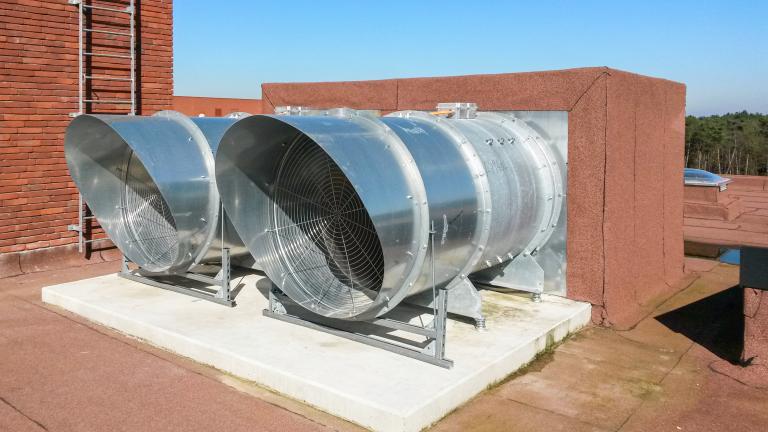
Smoke and heat ventilation solutions for buildings
The design of smoke and heat ventilation systems depends on the building's layout, height, intended use and applicable fire safety requirements.
Single-storey buildings
In single-storey buildings, smoke and heat ventilation systems help control the smoke layer and remove heat through natural or mechanical extraction. In Belgium, the design may be based on the applicable requirements of NBN S 21-208-1.
Multi-storey buildings
Multi-storey buildings, including shopping centres and office buildings, often require more complex smoke control solutions adapted to their layout and evacuation strategy.
Altenova provides tailored systems, including mechanical smoke extraction, ventilation ductwork and associated control equipment, designed in accordance with applicable regulations and relevant European standards.